
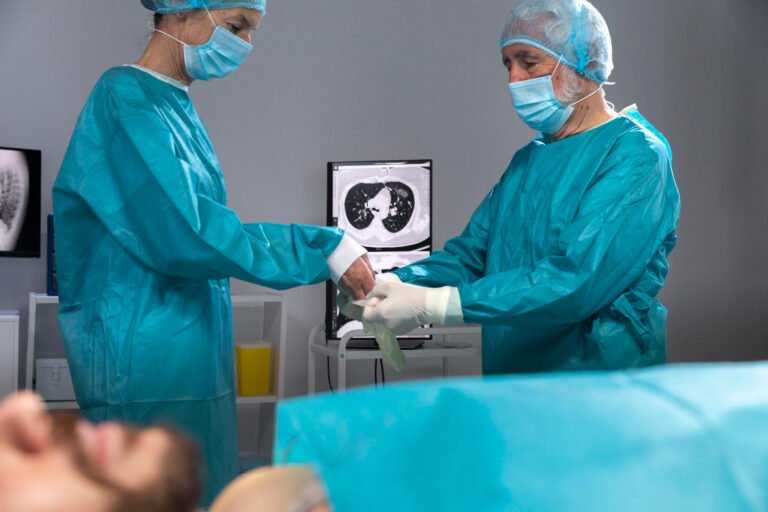
A 10.3 kg tumour was successfully removed from a patient’s back in Raipur through a highly coordinated surgical procedure. The case highlights advanced risk management, precise tissue handling, and controlled surgical execution in one of the largest tumour removals reported in India.
The patient had been living with the tumour for nearly 15 years. Over time, the growth caused severe pain, restricted movement, and affected basic daily activities like sitting and sleeping. This surgery brought long-awaited relief.
Why Is a 10.3 kg Tumour Considered a Rare Surgical Case?
Tumours exceeding 10 kg significantly increase surgical complexity due to high vascularity, tissue displacement, and prolonged operative time. Such cases require advanced planning and controlled execution to prevent complications like excessive bleeding and systemic instability.
At Bhim Rao Ambedkar Memorial Hospital in Raipur, this case stood out because most documented tumour removals in India are typically below 8 kg. A tumour of this size alters normal anatomy. Blood vessels expand. Skin stretches. Internal structures shift.
This is not just a larger surgery. It is a fundamentally different level of medical challenge.
Impact of Long-Term Tumour Growth on Daily Life
Large tumours create both physical and emotional strain. Long-term growth restricts mobility, disrupts posture, and limits independence in routine activities such as walking, sitting, and resting.
In this case, the patient struggled with basic functions. Even simple movements became painful. Over time, such conditions can lead to muscle imbalance and chronic discomfort. Social isolation is also common in such situations.
How Was the Complex Tumour Removal Performed Safely?
Surgeons used staged excision techniques, controlled vascular management, and real-time monitoring to reduce surgical risk. Instead of removing the entire tumour at once, the procedure was carefully divided into phases.
The surgical team, led by Dr Santosh Sonkar and Dr Manju Singh, approached the tumour methodically. Each step was planned to maintain stability throughout the operation.
Large tumour removal involves managing biological “load” such as tissue mass, blood flow, and pressure. Sudden removal can destabilize the body, so surgeons distribute this load across stages.
This approach is similar to manifold distribution in engineering systems. Instead of one channel handling the full load, multiple controlled pathways share the stress.
- Tissue is removed layer by layer
- Blood vessels are sealed in sequence
- Pressure changes are introduced gradually
This reduces shock and improves surgical safety.
Role of Diversity Factor in Surgical Risk Management
Not all surgical risks peak at the same time. The diversity factor explains that complications like bleeding, nerve stress, and pressure changes occur at different stages, not simultaneously.
Surgeons use this principle to plan the sequence of steps. By anticipating when each risk will peak, they avoid overwhelming the body’s response systems. This allows safer handling of large tumours without increasing overall risk.
What Role Did Anaesthesia Play in This Surgery?
Anaesthesia teams maintain vital stability during long and complex procedures. They regulate blood pressure, oxygen levels, and fluid balance to prevent complications during tumour removal.
In surgeries of this scale, anaesthesia is critical. It ensures that the body remains stable even as major tissue changes occur. Continuous monitoring helps detect even minor fluctuations in real time.
Successful outcomes depend on synchronized teamwork between surgeons, anaesthetists, and support staff. Each team handles a specific aspect of the procedure to maintain overall balance.
Senior surgeons including Dr Rajendra Ratre, Dr Mayank Bhushan Mishra, and Dr Preksha Jain assisted in the operation. Each played a defined role, ensuring smooth coordination throughout the procedure.
What Are the Risks in Removing Large Tumours?
Large tumour surgeries carry higher risks due to increased blood supply and longer exposure time. Common complications include heavy bleeding, infection, and delayed recovery.
Below is a comparison of surgical factors:
| Parameter | Standard Tumour | Large Tumour (>10 kg) |
|---|---|---|
| Blood Loss Risk | Moderate | High |
| Surgery Duration | 2–4 hours | 6–10 hours |
| Post-op Recovery Time | 1–2 weeks | 3–6 weeks |
| ICU Requirement | Rare | Often Required |
Hospitals prepare extensively for such cases. Backup systems, blood units, and ICU support are kept ready to manage emergencies.
Post-Surgery Recovery and Outcome
Recovery depends on stable vitals, proper wound healing, and absence of infection. Early discharge indicates successful surgical execution and effective post-operative care.
In this case, the patient remained stable after surgery and was discharged following recovery. This reflects both surgical precision and strong post-operative management.
What Does This Case Mean for Public Healthcare in India?
Government hospitals are increasingly capable of handling complex surgical procedures. With skilled teams and proper infrastructure, advanced treatments are becoming more accessible.
Procedures of this scale in private hospitals can cost between INR 5,00,000 and INR 15,00,000. Public hospitals performing such surgeries reduce financial burden for patients and improve access to care.
Cities like Raipur are emerging as centers for advanced medical care. Improved training, better equipment, and experienced teams are expanding treatment options beyond major metro areas.
Patients can now access complex surgeries closer to home, reducing travel costs and treatment delays.
What Does This Surgery Indicate for Future Tumour Treatments?
Modern tumour surgery is evolving toward structured planning, predictive risk management, and system-based execution. Applying engineering concepts like load distribution improves safety in complex procedures.
This case highlights how careful planning and coordination can manage even extreme medical challenges. It sets a reference point for handling similar high-risk cases in the future.